
Cal Poly Campus Dining’s cooking classes serve up life skills with a side of connection
Originally published in Food Service Director
By Benita Gingerella, Senior Editor • Friday, October 31st
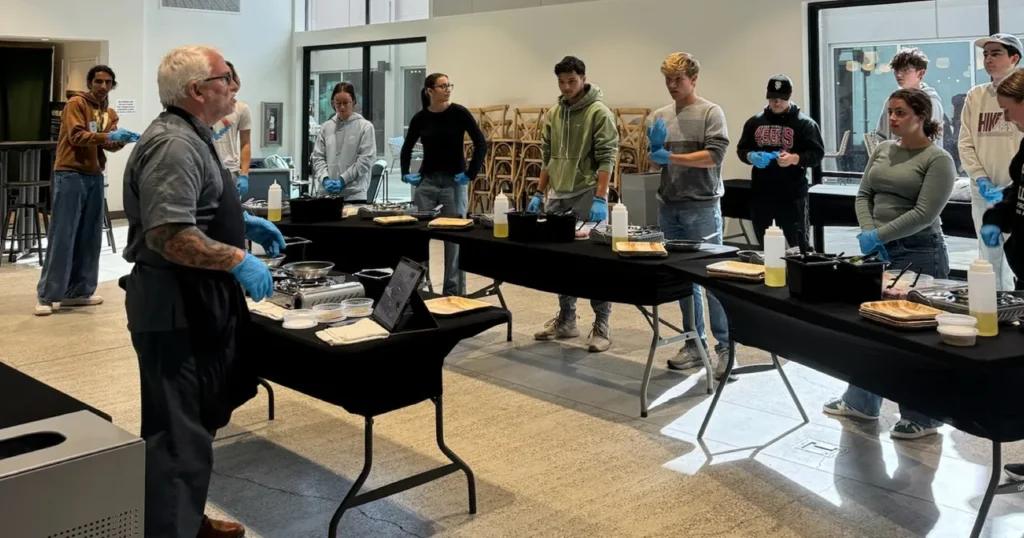
The Chartwells Higher Ed team at Cal Poly offers cooking classes to students once a month.
“Learn by doing” is the official mantra of California Polytechnic State University (Cal Poly) in San Luis Obispo, California and the school’s foodservice provider, Chartwells Higher Education, is embracing that mantra with its student cooking classes.
“Part of our mission is to be aligned with the university,” says Director of Campus Dining Jess Dozier. “We’ve got a really strong culinary team, and so it’s just been a fun way to involve students.”
The one-hour classes are held once a month and offer 20 to 25 students a chance to learn new culinary skills that they can take back to their dorm rooms.
Teaching students real-world skills
The dining team has been offering the classes for several years now. Each class begins with the instructor sharing the history behind whatever dish it is that they will make as well as how the dish is prepared in different cultures.
From there, the chefs walk students through how to prepare the item, and the students cook right alongside them. Earlier this semester, for example, Dozier taught students how to make their own omelets and even showed them how to flip them.
“It’s interactive. You’re doing it with them,” says Dozier. “It’s not just, ‘this is how you do it,’ it’s meant to be very fun and engaging, and very, very low key.”
The team tries to pick dishes that use simple ingredients and basic techniques that they know students will continue to make on their own once the class is over.
Forming a connection
The classes have become popular with students and generally sell out. The team is currently looking at ways they can grow the program, so they don’t have to turn students away who want to participate.
For fellow dining teams looking to start their own cooking classes with students, Dozier recommends not to overthink it and just have fun with it.
Even though setting up and running the classes takes time, it is worth it for the opportunity to get in front of students and form a connection with them.
“If you can make a connection with students, then you’re more apt to get feedback from them and things like that. And that’s what you need to make your program better,” says Dozier. “This is just another avenue to do that too but have some fun. It’s mainly just for fun.”